Tax Software vs Accountant: Best Option for Sole Traders

.png)
Composed by Taxara on
20/7/2026
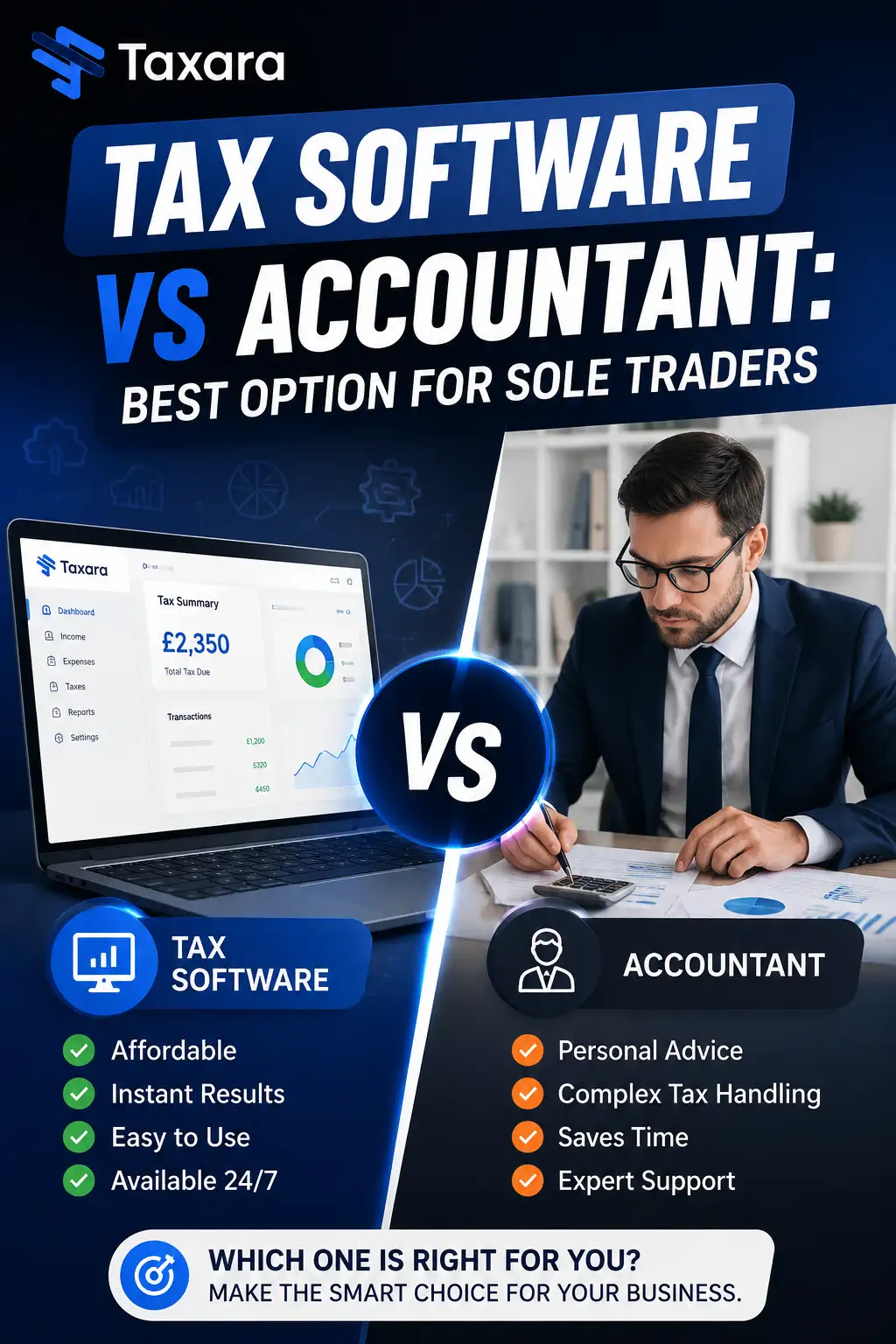
If you already know that sole traders pay Income Tax and National Insurance, not Corporation Tax, the next question is simple: how do you actually work that tax out and file it? Most UK sole traders pick one of three routes: a spreadsheet, tax software, or an accountant. Each one costs a different amount, takes a different amount of time, and suits a different stage of business.
There is no single right answer. The best choice depends on how much you earn, how many transactions you have, and how much time you want to spend on admin. This guide breaks down all three options so you can pick the one that fits, whether you're just starting out or already juggling a busy client list. If you want a simple way to track income and expenses without switching between five different tools, Taxara is built for exactly that.
The Three Options, Side by Side
Before going into detail, here's how the three main routes compare at a glance.
OptionYearly CostTime It TakesBest ForSpreadsheetFreeHigh, especially at year endVery low profit, few transactionsTax software£5 to £30 a monthLow, ongoingMost sole tradersAccountant£300 to £1,000+ a yearLow for you, but you still need tidy recordsHigher profit or complex situations
Each option is covered in more depth below, including who it actually suits and where it tends to fall short. A quick reminder before that: this decision is only about how you calculate and file tax, not what type of tax you pay. If that split is still unclear, do sole traders pay corporation tax covers it in plain terms.
Doing It Yourself With a Spreadsheet
A spreadsheet costs nothing, and you stay in full control of every number. For someone with a handful of clients and simple expenses, this can work fine for a year or two.
The problems show up later. Spreadsheets don't link to HMRC, so they don't help with Making Tax Digital, which asks some sole traders to keep digital records and report income more often. Mistakes are also easy to make and hard to spot, since one wrong formula can throw off your whole tax year. Many sole traders also miss expenses they could have claimed, simply because nothing is tracking them automatically.
A spreadsheet suits you if your profit is low, your transactions are few, and you're comfortable checking your own maths. If any of those isn't true, it's worth moving to something built for the job. One clear sign it's time to move on is confusion over what actually counts as taxable profit, which matters more than the tool you use to track it.
Tax Software
Tax software does the maths for you as you go, instead of leaving it all for year end. Most apps let you scan receipts, log expenses on the spot, and see your profit in something close to real time. Many are also built to work with Making Tax Digital, which matters more each year as HMRC moves more reporting online.
The trade-off is a small monthly cost, usually somewhere between £5 and £30 depending on the features you need. You also still need to understand your own numbers. Software can calculate your tax, but it can't tell you whether an expense is genuinely allowable, so some judgment still sits with you. It's the same kind of judgment call covered in our sole trader vs limited company comparison, where growing profit changes what actually makes sense for your business.
A few well-known options in the UK include Taxara, FreeAgent, and QuickBooks Self-Employed. Each one has a different focus, so it's worth checking what each does before picking one, rather than going with whichever is easiest to find.
Hiring an Accountant
An accountant brings knowledge you won't get from software alone. They know the tricky rules, they can deal with HMRC directly on your behalf, and they become genuinely useful once your business grows past the simple stage. Many sole traders bring one on once profit crosses a certain point, or once their tax situation gets more complicated, such as having multiple income sources.
The downside is cost. Sole trader accountants in the UK usually charge somewhere between £300 and £1,000 a year, depending on how much work they do. You also lose the day-to-day view of your numbers that software gives you, and you still need to hand over organized records, since no accountant can work well with a shoebox of receipts.
Software Plus an Accountant Check
A lot of sole traders end up somewhere in the middle. They use software all year to track income and expenses, then bring in an accountant once a year, or at key Making Tax Digital deadlines, to check everything is correct before it's filed.
This approach tends to cost less than a full accountant service, since most of the day-to-day work is already done by the software. It also gives you more confidence than doing everything alone, because someone qualified has looked over your numbers before they go to HMRC. If you're not yet sure whether new reporting rules apply to you, our Making Tax Digital checklist walks through what to check and prepare before the deadlines arrive.
Which Option Fits Your Profit Level
Profit level is one of the clearest signals for which route makes sense, and it follows the same pattern as choosing a business structure: higher profit tends to justify more structure and, often, more professional support.
Profit LevelBest FitWhyUnder £20,000Software or spreadsheetSimple tax position, low risk of costly mistakes£20,000 to £50,000Software, accountant optionalEnough complexity to benefit from software, not always enough to need an accountant£50,000+Software plus an accountantHigher stakes make a second set of eyes worth the cost
These are starting points, not fixed rules. Someone with a simple business earning £60,000 might manage fine with software alone, while someone earning £25,000 with several income streams might want an accountant sooner.
How Making Tax Digital Changes Things
From April 2026, sole traders above certain income thresholds have to report income to HMRC every quarter instead of once a year. This is a big shift for anyone still using a spreadsheet, since quarterly reporting is hard to keep up with by hand.
Software built for Making Tax Digital handles this automatically, pulling your records into the right format at the right time.
Quick Checklist: Which Option Should You Choose?
- My profit is under £20,000 and my finances are simple → spreadsheet or software
- I want to see my tax position throughout the year, not just at the end → software
- My profit is over £50,000 or my situation is complex → software plus an accountant
- I fall under Making Tax Digital reporting rules → software, not a spreadsheet
- I don't have time to check my own numbers carefully → an accountant, or a close accountant review
- I haven't compared actual costs and time for my situation yet → do that before deciding
The Bottom Line
There's no single best way to do sole trader taxes. A spreadsheet can work for a simple, low-profit business. Software fits most sole traders once things get busier, since it saves time and keeps you ready for Making Tax Digital. An accountant earns their fee once your profit or complexity grows enough to justify it.
The real mistake isn't picking the "wrong" option. It's sticking with a method that no longer fits your business simply because it's familiar. If you want to see what the software route looks like in practice, Taxara's pricing is a fair place to start.
Reviewed against HMRC's Self Assessment and Making Tax Digital guidance for the 2026/27 tax year. Rules can change with future Budgets, so always confirm current requirements on GOV.UK or with a qualified accountant.
Never stress again
Never be late again
Never waste time
.png)


On time.
In shape.
Taxara keeps your finances in shape and always on time - with just a few simple taps and clicks.
Try for free
Simple.
Affordable.
Taxara comes with a free plan, and the premium one starts from £6.99 - about the same as your daily coffee.
Try for free
Your time.
All yours.
Win back your time and focus on what you love most - let Taxara’s AI take care of the rest.
Try for freeGot questions?

Save time for what matters most - with Taxara
Taxara Ltd. 273/275 Wilmslow Road, Manchester, England
info@taxara.co.uk
support@taxara.co.uk
.png)
.png)
.png)