Sole Trader vs Limited Company UK 2026: Which One Pays Less Tax?

.png)
Composed by Taxara on
10/7/2026
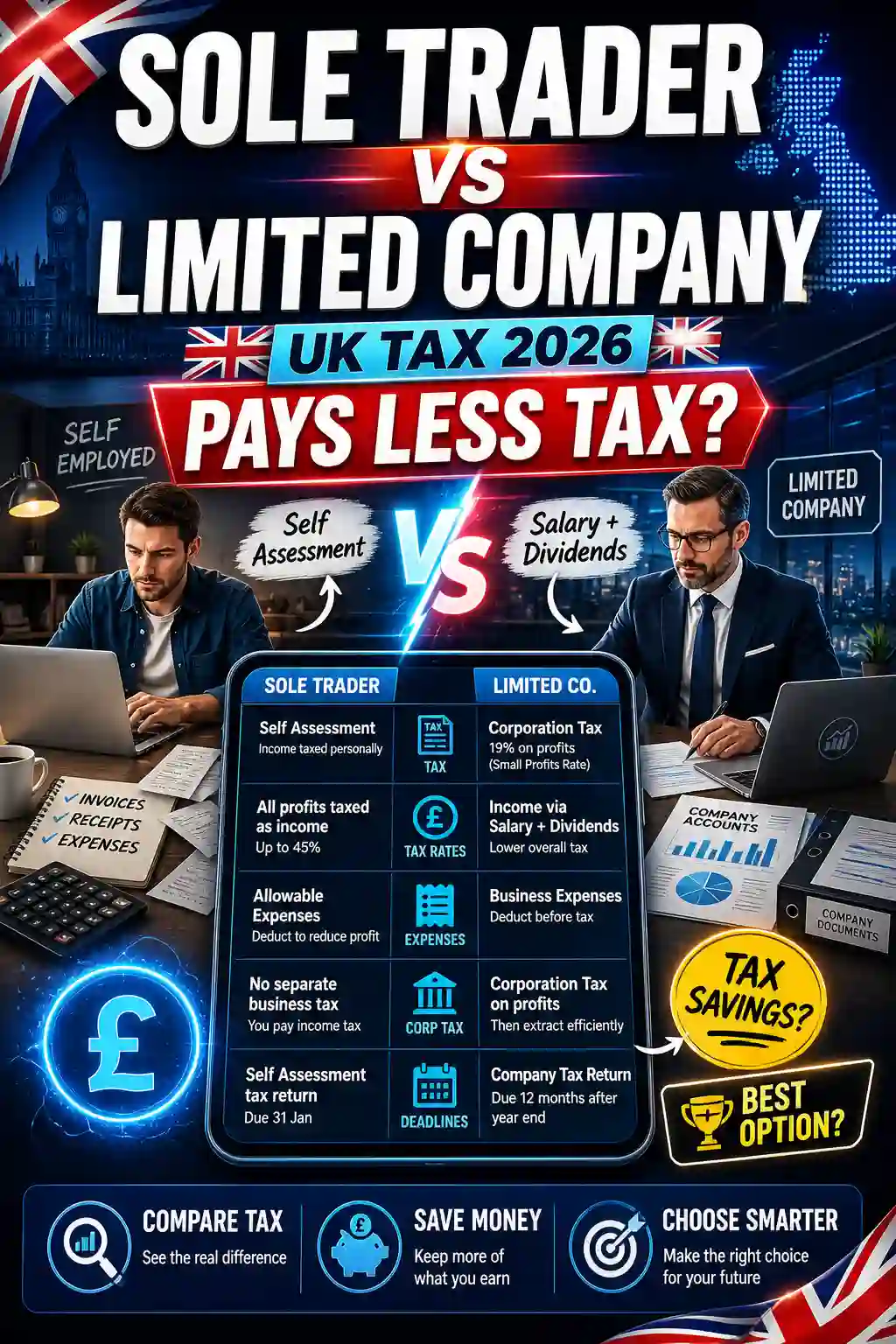
Choosing between staying a sole trader or setting up a limited company is one of the biggest decisions for freelancers, contractors, consultants, and small business owners in the UK. It affects how much tax you pay, how much admin lands on your desk, how you take money out of the business, and how exposed you are personally if something goes wrong.
The short version: sole traders are usually simpler and often cheaper at lower profits, while limited companies can be more tax efficient at higher profits. But 2026 has made that answer less clean than it used to be. Dividend tax rates went up from 6 April 2026, and HMRC now lists them at 10.75% for basic rate taxpayers, 35.75% for higher rate taxpayers, and 39.35% for additional rate taxpayers. That change alone shifts where the "limited company saves you money" line actually sits.
Whatever structure you land on, you'll still need somewhere to keep income, expenses, invoices, and tax records straight. That's the gap Taxara is built to fill for UK sole traders and small companies.
Sole Trader vs Limited Company: Quick Comparison
FactorSole TraderLimited CompanyLegal statusYou and the business are the sameThe company is a separate legal entityTax paidIncome Tax and National InsuranceCorporation Tax, then personal tax on salary or dividendsAdmin levelLowerHigherLiabilityPersonal liabilityLimited liabilityBest forFreelancers, side hustles, small businessesGrowing businesses, higher profits, formal clientsTax flexibilityLimitedMore flexibleSetupVery simpleRequires company registrationAccountsSelf AssessmentCompany accounts, Corporation Tax return, director filings
A sole trader keeps things simple: you earn money, deduct allowable business expenses, and pay tax on what's left. A limited company works the other way round. The company earns the money first, pays Corporation Tax on it, and then the director takes money out through salary, dividends, or a mix of both.
How Sole Traders Are Taxed in the UK in 2026
A sole trader pays tax on profit, not on total income. Profit is your business income minus allowable business expenses. So if you earn £45,000 from clients and spend £8,000 on allowable costs, your taxable profit is £37,000, not £45,000.
Sole traders usually deal with:
Tax TypeWhat It Applies ToIncome TaxBusiness profit after expensesClass 4 National InsuranceSelf-employed profits above the thresholdVATOnly if registered or required to registerStudent loan repaymentsIf applicable
For the 2026/27 tax year, the standard Personal Allowance is £12,570, according to HMRC. You can generally earn up to that before paying Income Tax, though the allowance reduces by £1 for every £2 of adjusted net income above £100,000.
Good record-keeping matters here too. HMRC's Making Tax Digital rules for small business owners are changing how many self-employed people report income, so it's worth knowing where you stand before the reporting deadlines catch you out.
Main benefits of staying a sole trader
The biggest one is simplicity. There's no company to register, no company accounts to file, no Corporation Tax return. You register as self-employed, keep decent records, and submit a Self Assessment return each year.
For a lot of people, that's genuinely enough: freelancers, delivery drivers, tutors, designers, tradespeople, consultants, and anyone running a side hustle alongside other work.
Cost is the other benefit. Accountancy fees tend to be lower for sole traders because there's less to report. This matters more than people expect, because a limited company might save tax on paper, but those savings can vanish once you add up the extra admin and accountancy costs.
Main downsides of staying a sole trader
The main one is personal liability. There's no legal separation between you and the business. If the business owes money or faces a claim, your personal assets can be at risk.
You also lose flexibility in tax planning. All your profit is taxed as personal income in the year you earn it. You can't leave money inside the business the way a limited company can.
When sole trader status usually makes more sense
SituationWhy Sole Trader Tends to WorkYour profit is lowTax savings from a company may be too small to matterYou want simple adminSelf Assessment is far less work than company accountsYou take all the profit personallyA company gives less benefit if you withdraw everything anywayYou're testing a business ideaSimple setup makes it easy to start and just as easy to stopYou want lower accounting costsSole trader accounts are usually cheaper to prepare
If you're leaning toward staying self-employed, picking the right tax app for sole traders is a sensible next step, since good software does a lot of the heavy lifting that an accountant would otherwise charge you for.
How Limited Companies Are Taxed in the UK in 2026
A limited company is a separate legal entity. It earns income, pays its own expenses, owns its own assets, and pays Corporation Tax on its profits.
For 2026, HMRC's small profits Corporation Tax rate is 19% for companies with profits under £50,000, and the main rate is 25% for companies with profits over £250,000. Marginal Relief can apply in between.
Company ProfitCorporation Tax PositionUp to £50,00019% small profits rate£50,001 to £250,000Marginal Relief may applyOver £250,00025% main rate
After Corporation Tax is paid, the director takes money out through salary, dividends, or both.
Salary vs dividends
A salary runs through payroll and is usually an allowable company expense, which reduces the profit Corporation Tax is charged on. It can also trigger personal Income Tax and National Insurance.
Dividends work differently. They're paid out of profits after Corporation Tax has already been deducted, so there's no National Insurance on them, but they are taxed personally above the dividend allowance.
From 6 April 2026, dividend tax rates are:
Tax BandDividend Tax RateBasic rate10.75%Higher rate35.75%Additional rate39.35%
HMRC confirms the ordinary and upper dividend rates rose by 2 percentage points from April 2026, while the additional rate held at 39.35%. This is the change that matters most for anyone assuming a limited company automatically wins on tax. It might still, but the margin has narrowed and it's worth actually running the numbers rather than assuming.
Sole Trader vs Limited Company: Which Pays Less Tax?
There's no single answer here, because the right structure depends on your profit, expenses, personal income needs, and long-term plans. That said, some patterns hold up consistently.
Lower profits. At lower profit levels, a sole trader is usually the better call. The tax difference may be small, but the admin gap is not. You skip company filings, payroll complexity, director duties, and higher accountancy fees. Under roughly £30,000 profit, a limited company often doesn't save enough to justify the extra work.
Medium profits. Between roughly £30,000 and £50,000, the decision gets more balanced. Some people stay sole traders simply because it's easier. Others incorporate for liability protection, a more formal image, or room to grow. At this stage, tax shouldn't be the only factor: think about whether you want to retain profits, hire staff, or take on bigger clients.
Higher profits. Above this range, a limited company tends to become more attractive, especially if you don't need to draw out all the profit personally. If your company makes £90,000 and you only need £45,000 to live on, the rest can stay in the company after Corporation Tax, ready for growth, equipment, or hiring. A sole trader doesn't get that option, since all profit is taxed personally the year it's earned.
Profit LevelLikely Better OptionWhyUnder £30,000Sole traderSimple, low admin£30,000–£50,000DependsTax savings may be limited£50,000–£100,000Limited company may helpMore tax planning flexibility£100,000+Worth reviewing as limited companyPersonal Allowance taper and retained profits matter more
Admin Burden: Which Is Easier to Manage?
A sole trader has less admin, full stop. You track income, log expenses, and file one tax return. A limited company adds company accounts, a Corporation Tax return, payroll if you take a salary, confirmation statements, and director responsibilities.
This is why admin cost belongs in the decision alongside tax. Saving £800 in tax doesn't mean much if it costs you £1,200 more in accounting fees and a lot more of your time.
Quick checklist: sole trader or limited company?
- My profit is under £30,000 a year → sole trader is probably simpler
- I need to withdraw most or all of my profit personally → a company adds less value
- I want to protect personal assets from business risk → limited company
- I plan to leave money in the business to grow it → limited company
- I work with agencies or corporate clients who prefer a company structure → limited company
- I'd rather avoid payroll, company accounts, and director filings → sole trader
- I haven't run the actual numbers for my situation yet → do that before deciding either way
Limited Company Benefits Beyond Tax
Tax isn't the only reason people incorporate. A limited company can make a business look more established, which matters to agencies, corporate clients, and larger companies that prefer working with registered companies. It also makes it easier to bring in shareholders, hire staff, sell the business later, or keep business risk separate from your personal life.
Limited liability is the other big one. In most cases, the company is on the hook for its debts, not you personally. That protection isn't unlimited, particularly around fraud, personal guarantees, or director misconduct, but it's still one of the main reasons owners choose to incorporate.
If invoicing is becoming a bigger part of your work either way, it's worth getting the basics right: company name, registration details, payment terms, and VAT details if you're registered. Our guide to invoicing apps for UK freelancers walks through what to look for.
So, Which One Pays Less Tax in 2026?
If your business is small and you take all the money out for personal use, staying a sole trader will likely cost less overall once admin and accountancy fees are factored in. If your profits are higher, your risk is greater, or you want to retain money inside the business, a limited company can still be the more tax-efficient route, but the 2026 dividend tax rise means that advantage should be checked with real numbers, not assumed.
If You WantConsiderSimplicitySole traderLower admin costsSole traderLimited liabilityLimited companyTax planning flexibilityLimited companyRetaining profitsLimited companyTesting a new ideaSole traderScaling a businessLimited company
What Should You Do Next?
Before you change anything, look at your expected profit, how much money you personally need to live on, your business risk, and what the admin will actually cost you. A UK accountant can run the real numbers for your specific situation, and for product questions you can contact Taxara directly.
It's also worth thinking about which software you'll use either way. Good bookkeeping matters whether you're self-employed or running a company, and Taxara's pricing is built to be easy to understand upfront, without guessing what support costs later. You can also read the story behind Taxara if you're curious why it was built specifically for UK small business owners.
Final Verdict
A sole trader setup tends to win for lower-profit businesses: it's simple, cheap to run, and easy to manage. A limited company tends to win for higher-profit businesses, offering more tax planning room, limited liability, and a more formal structure.
In 2026, the right answer depends on your profit level and how you take money out of the business. Don't switch to a limited company just because someone told you it always saves tax. It doesn't, not automatically. Run your own numbers, understand the admin trade-off, and pick the structure that actually fits how you work.
Ready to simplify your tax and bookkeeping? Try Taxara free.
Never stress again
Never be late again
Never waste time
.png)


On time.
In shape.
Taxara keeps your finances in shape and always on time - with just a few simple taps and clicks.
Try for free
Simple.
Affordable.
Taxara comes with a free plan, and the premium one starts from £6.99 - about the same as your daily coffee.
Try for free
Your time.
All yours.
Win back your time and focus on what you love most - let Taxara’s AI take care of the rest.
Try for freeGot questions?

Save time for what matters most - with Taxara
Taxara Ltd. 273/275 Wilmslow Road, Manchester, England
info@taxara.co.uk
support@taxara.co.uk
.png)
.png)
.png)


.png)