How to Register as a Sole Trader in the UK: A Step-by-Step Guide

.png)
Composed by Taxara on
2/9/2026
By Sarah Nolan, ACCA. Sarah is a chartered accountant who has helped over 300 UK freelancers and small business owners set up as sole traders. This guide was checked against HMRC's current guidance in September 2026.
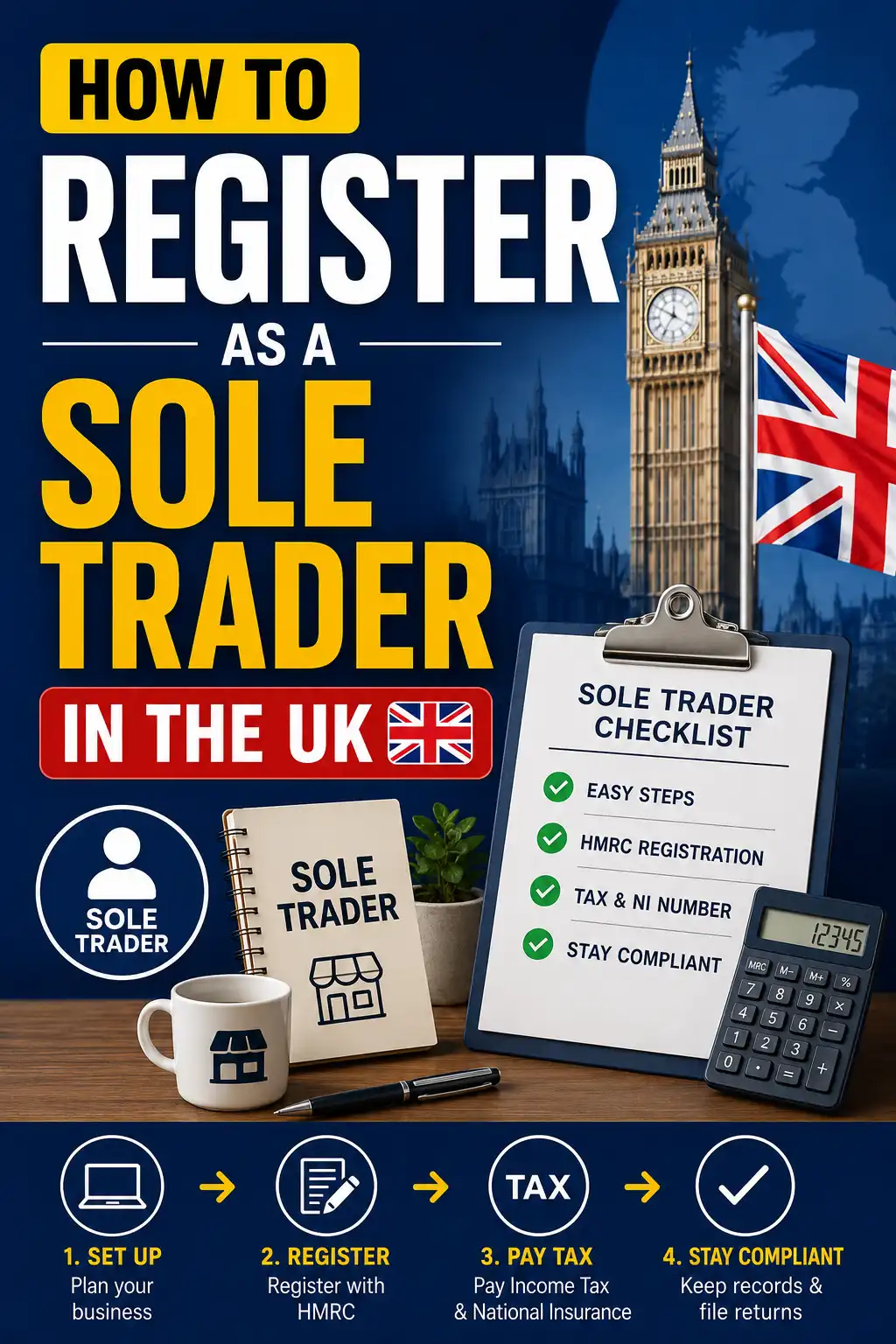
You register as a sole trader in the UK by telling HMRC you're self-employed, either online or by post, then waiting for your Unique Taxpayer Reference (UTR) to arrive in the post. Most people finish the online form in under fifteen minutes. The part that actually takes time is what happens after: setting up a Government Gateway account, working out your first Self Assessment deadline, and deciding how you'll keep records.
If you've earned more than £1,000 from self-employment in a tax year, you're legally required to register, even if it's a side project you run from your kitchen table. I've had clients put this off for months because they weren't sure if their small Etsy shop or freelance graphic design counted. It does. HMRC doesn't care whether the business is your main income or a Saturday hustle.
Taxara's free trial walks you through this same registration process alongside your bookkeeping setup, if you'd rather not juggle HMRC's forms on your own.
What Is a Sole Trader, Exactly?
A sole trader is someone who runs their own business as an individual, rather than through a limited company. You and the business are legally the same entity: there's no separation between your personal finances and the business's.
That has upsides and downsides. Setting up is fast and cheap. You keep all the profit after tax. But you're also personally liable for any business debts, which is the main reason some people eventually switch to a limited company once they're earning more. If you're weighing that decision, our guide on sole trader vs limited company breaks down the tax difference in more detail.
Sole trader status suits freelancers, tradespeople, consultants, and anyone testing a business idea before committing to something bigger. It's the default structure for roughly 3.1 million UK businesses, according to government business population estimates.
Who Needs to Register as a Sole Trader?
You need to register if you earned more than £1,000 from self-employment in a single tax year (6 April to 5 April), even from one client or one sale. Below that threshold, HMRC's trading allowance means you don't need to tell them or pay tax on it.
A few situations people get wrong:
- Selling a few things on eBay or Vinted. If you're clearing out your wardrobe, that's not trading and doesn't need registering. If you're buying stock to resell, it is.
- A second job alongside PAYE employment. You still need to register and file Self Assessment for the self-employed portion, even though your main job is taxed through payroll.
- Freelancing for a single client. Working exclusively for one company doesn't automatically make you their employee. What matters is whether you control your own hours, tools, and how the work gets done.
If you're not sure which side of the line you fall on, HMRC's employment status tool is worth ten minutes, or ask an accountant before you register rather than after.
How to Register as a Sole Trader: Step by Step
Here's the actual process, in order.
Step 1: Check You Haven't Already Registered
If you've filed a Self Assessment return before, for any reason, you may already have a UTR. Check old HMRC letters or your Personal Tax Account before starting a fresh registration, since duplicate records cause delays later.
Step 2: Register Online Through GOV.UK
Go to GOV.UK and use the "register for Self Assessment" service. You'll need:
- Your National Insurance number
- Full name, date of birth, and address
- Contact details (email and phone)
- The date your business started
- A description of what your business does
- Your business name, if you're trading under one other than your own name
The whole form takes most people ten to fifteen minutes. I timed it with a client in July this year: 12 minutes from start to submission, including a pause to check her NI number on an old payslip.
Step 3: Create a Government Gateway Account
If you don't already have one, you'll create a Government Gateway ID as part of registration. Write the ID down somewhere safe. It's a 12-digit number and there's no way to guess it later if you lose it, you'll have to go through account recovery, which can take a week or more.
Step 4: Wait for Your UTR to Arrive by Post
HMRC posts your ten-digit Unique Taxpayer Reference within about ten working days of registering, sometimes longer around the January Self Assessment deadline when volumes spike. This is a physical letter, not an email, so make sure the address on your registration is current.
Step 5: Activate Your Online Account
A second letter follows with an activation code for your Government Gateway account. You need both the UTR and the activation code to file your first return, so keep them together.
Once your account is active, you can see your Self Assessment obligations, check what you owe, and file returns directly through it.
What Documents Do You Need?
Beyond your National Insurance number, you don't need much paperwork to register itself. What you do need to start collecting from day one:
- Invoices or records of everything you're paid
- Receipts for business expenses (fuel, equipment, software subscriptions, home office costs)
- Bank statements if you're using a separate business account, which I'd recommend even though it's not legally required for sole traders
Not sure what counts as a deductible expense? Our full list of allowable expenses for sole traders covers what HMRC will and won't accept, with examples by trade.
When Do You Need to Register By?
The deadline is 5 October following the end of the tax year in which you started trading. So if you started your business in June 2026, the 2026/27 tax year runs to 5 April 2027, and you'd need to register by 5 October 2027.
Miss it and HMRC can issue a "failure to notify" penalty, calculated as a percentage of the tax you owe based on how late you were and whether it looks deliberate. In practice, registering a few weeks late with tax already paid on time rarely triggers a large penalty, but there's no reason to test that. Register as soon as you know you're trading.
What Happens After You Register?
Registration itself doesn't cost anything and doesn't mean you owe tax immediately. It just puts you into the Self Assessment system. From there:
- You'll file one Self Assessment return per tax year, due by 31 January online (31 October for paper returns, which almost nobody uses anymore).
- You'll pay Income Tax and National Insurance on your profits, not your turnover. Business expenses come off first.
- You may need to make Payments on Account, which are advance payments toward next year's bill, split across January and July.
- Making Tax Digital changes are rolling out for the self-employed, which affects how and how often you'll need to report. Our guide to Making Tax Digital for the self-employed explains the current timeline and thresholds.
A lot of new sole traders assume registering and filing are the same thing, then panic in January when they realise there's a whole return to do. They're separate steps, and the first return usually covers a partial year, which trips people up because the numbers don't match a clean twelve months.
Common Mistakes When Registering
From working with clients who've been through this:
Registering under the wrong start date. Your start date is when you began trading, not when you registered. Backdating too far or picking a date that doesn't match your bank records causes questions later.
Losing the UTR letter. It arrives by post, looks unremarkable, and gets binned along with junk mail more often than you'd think. Photograph it the day it arrives.
Not separating personal and business spending. Legally optional, practically essential. Untangling a year of mixed transactions at tax time costs far more in accounting fees than opening a separate account would have.
Assuming registration equals VAT registration. They're different. You only need to register for VAT once your taxable turnover passes £90,000 (as of the current threshold), or if you choose to register voluntarily.
If you'd rather have the bookkeeping and filing side sorted from day one, Taxara's features for sole traders cover invoicing, expense tracking, and Self Assessment prep in one place, and our pricing page shows what that costs month to month.
Never stress again
Never be late again
Never waste time
.png)

On time.
In shape.
Taxara keeps your finances in shape and always on time - with just a few simple taps and clicks.
Try for free
Simple.
Affordable.
Taxara comes with a free plan, and the premium one starts from £6.99 - about the same as your daily coffee.
Try for free
Your time.
All yours.
Win back your time and focus on what you love most - let Taxara’s AI take care of the rest.
Try for freeGot questions?

Save time for what matters most - with Taxara
Taxara Ltd. 273/275 Wilmslow Road, Manchester, England
info@taxara.co.uk
support@taxara.co.uk
.png)
.png)
.png)


.png)